The 5th U.S. Circuit Court of Appeals should lift a preliminary injunction against Mississippi’s social media age-verification law, Mississippi Attorney General Lynn Fitch (R) argued in a filing Thursday (docket 24-60341) (see 2407290008). HB-1126 requires that social media platforms obtain parental consent to allow minors to access their services. NetChoice sued to block HB-1126 on free speech grounds and won a preliminary injunction from the U.S. District Court for Southern Mississippi on July 1 (see 2407160038). District Judge Halil Suleyman Ozerden on July 15 denied Fitch’s request to lift the injunction, finding NetChoice is likely to succeed on the merits of its First Amendment challenge. Fitch argued before the appeals court Thursday that the injunction rests on “facial claims that NetChoice failed to support.” Nothing in the law “facially” violates the First Amendment because it regulates online conduct, not online speech, said Fitch: The law’s “coverage turns on where harmful conduct toward minors online is most likely: the interactive social-media platforms that allow predators to interact with and harm children.”
Social Media
Social media platforms are facing intense scrutiny over how they collect, share and monetize user data. As new state and federal laws focus on age verification, parental controls and transparency requirements, social media companies face legal risks around algorithmic targeting, third-party tracking and children's safety. This page follows key legislation, investigations and lawsuits shaping privacy practices for major social platforms.
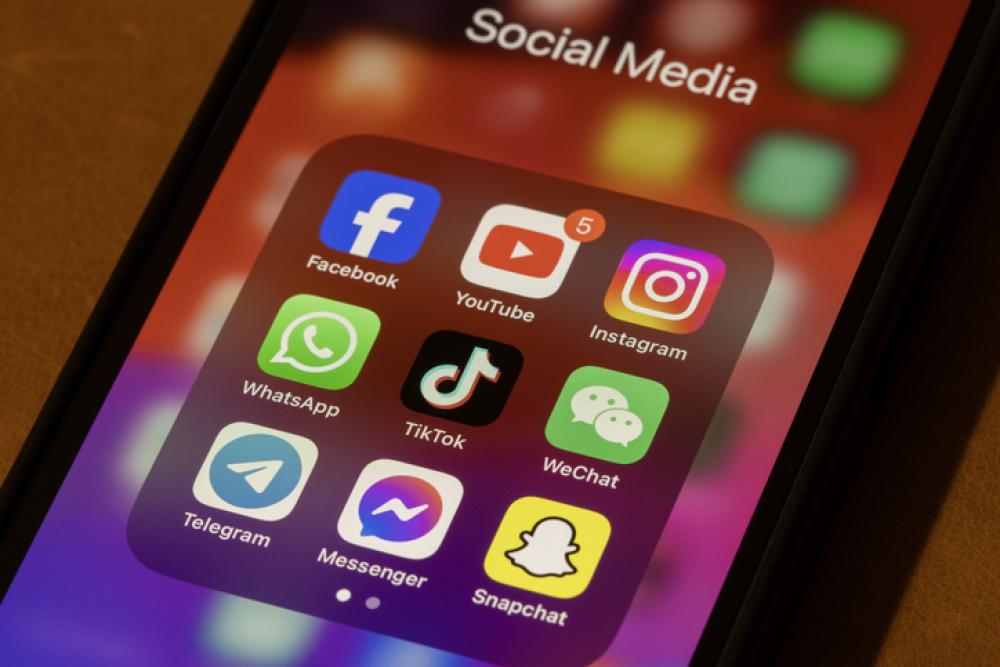
“When it comes to communicating outages, social media can and should be a public utility or cable TV provider’s best friend,” a West Virginia Public Service Commission task force said Wednesday. The group reported on outage notification best practices in response to a PSC request (see 2405220049). "In the past, best practices in outage communication may have centered around emails, phone calls, and even press releases,” the report said. “Today, however, customers expect more immediate updates via text alerts, real-time outage maps, and social media platforms like Facebook, Instagram and Twitter (X).” Social networks are now “an absolute must-have” as they “allow for the provision of quick updates regarding the status of outage situations so customers are not left searching for relevant information.”
The Senate voted 91-3 on Tuesday to approve a pair of kids’ online safety bills, shifting attention to the House, where the legislation awaits committee consideration.
Texas received $1.4 billion from Meta Tuesday, settling claims the Facebook parent captured biometric information in violation of state law. The same day, tech industry groups sued Texas over a kids’ online safety law. NetChoice and the Computer & Communications Industry Association (CCIA) said the 2023 law (HB-18), which requires that social media companies verify users’ ages and get parental consent for children younger than 18, violates the First Amendment in a way similar to a 2021 Texas social media law that went to the U.S. Supreme Court.
The 5th U.S. Circuit Court of Appeals shouldn’t stay a lower court’s decision that temporarily enjoins a Mississippi law requiring kids younger than 18 to get parental consent before accessing social media, NetChoice said at the appeals court Friday. Mississippi Attorney General Lynn Fitch (R) appealed the U.S. District Court for Southern Mississippi preliminary injunction to the 5th Circuit earlier this month (see 2407030076 and 2407010062). The district court also denied Fitch’s request to stay that preliminary injunction (see 2407160038). Mississippi is incorrect that the law regulates conduct, not speech, NetChoice said. “The Act’s restrictions on protected speech are unconstitutional unless they survive strict scrutiny,” the tech industry group wrote. “They cannot, as the Act’s tailoring flaws preclude them from surviving any level of heightened First Amendment scrutiny. The Act restricts too much speech on too many websites where there are private alternatives to governmental regulation.”
Arkansas’ age-verification law violates the First Amendment and should be permanently enjoined, NetChoice argued Friday before the U.S. District Court for Western Arkansas in Fayetteville (docket 5:23-cv-05105). The court in August granted a preliminary injunction blocking the Social Media Safety Act (Act 689), concluding it “likely violates” the First Amendment and Due Process Clause. NetChoice said in its filing Friday that the state continues to rely on failed arguments that Act 689 is a narrowly tailored regulation of online conduct, not online speech. NetChoice argued courts have held the First Amendment can’t be evaded by regulating a “non-speech” component of a protected activity: For example, a law banning books through a restriction on the sale of ink is no less unconstitutional than a direct ban on book sales. NetChoice requested the court grant its motion for summary judgment.
Kentucky Gov. Andy Beshear and North Carolina Gov. Roy Cooper possess the best telecom policy credentials among the main contenders to be the Democrats’ vice presidential nominee, broadband advocates and other policy observers told us. All the contenders hold broadly similar views to Vice President Kamala Harris on broadband and telecom policy matters, but could bring different perspectives to the ticket, experts said in interviews last week.
The Senate voted 86-1 Thursday to advance two kids’ safety bills, with Sen. Rand Paul, R-Ky., casting the lone no vote (see 2407240057).
The Senate should pass kids’ privacy legislation without amendments, Sen. Richard Blumenthal, D-Conn., told us Wednesday.
A district court dismissed one count of NetChoice’s 11-count complaint that argued Section 230 of the Communications Decency Act preempts Utah’s Minor Protection in Social Media Act. Utah Attorney General Sean Reyes (R) had sought dismissal of the count (see 2406030026), arguing that nothing in the state law is inconsistent with Section 230. “The court concludes the challenged provisions impose liability for conduct that falls beyond the protections Section 230 affords NetChoice members,” Judge Robert Shelby of the U.S. District Court of Utah ruled (case 2:23-cv-00911-RJS-CMR). “The Act’s prohibitions on the use of autoplay, seamless pagination, and push notifications are not inconsistent with Section 230.” The question is whether those bans “treat NetChoice members as the publisher or speaker of the third-party content they disseminate,” wrote Shelby in NetChoice v. Reyes. They don’t, he said. “The Act’s prohibitions focus solely on the conduct of the covered website -- the website’s use of certain design features on minors’ accounts -- and impose liability irrespective of the content those design features may be used to disseminate.” The judge added, “NetChoice’s interpretation of Section 230 as broadly immunizing websites from any liability for design decisions related to how a site ‘disseminate[s] and display[s] third-party speech’ is unmoored from the plain text of Section 230 and unsupported by the caselaw NetChoice cites.” In a statement Tuesday, NetChoice stressed that the court dismissed only one claim and that its First Amendment and other federal preemption claims remain in play. “We look forward to seeing Utah in court in August,” said Chris Marchese, NetChoice Litigation Center director.