A state bill forcing privatization of a municipal broadband network in Frankfort, Kentucky, could debut shortly, Frankfort Plant Board (FPB) officials said in interviews. FPB is fighting the legislation, which is expected to be written by state Sen. Gex Williams (R). The bill, if and when it's introduced, would be part of a trend of industry attacks on muni broadband, said Gigi Sohn, American Association for Public Broadband (AAPB) executive director. Some argue private investment is superior to public broadband, while others believe certain conditions prevent making a true comparison between municipal and private networks. Still others think a municipal network is appropriate only in areas where private companies opt out.
Social Media
Social media platforms are facing intense scrutiny over how they collect, share and monetize user data. As new state and federal laws focus on age verification, parental controls and transparency requirements, social media companies face legal risks around algorithmic targeting, third-party tracking and children's safety. This page follows key legislation, investigations and lawsuits shaping privacy practices for major social platforms.
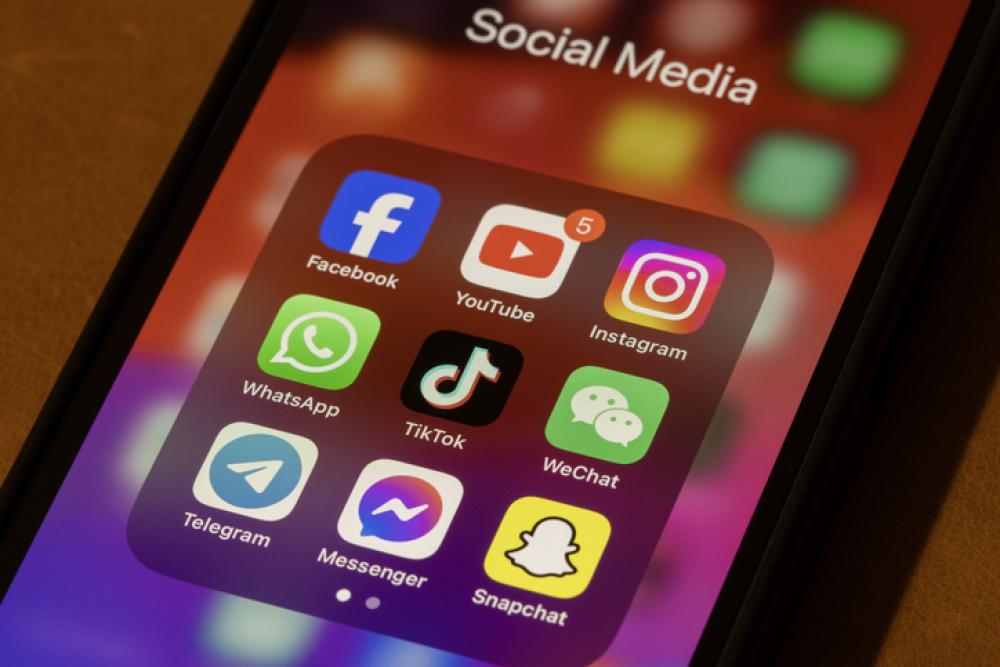
South Carolina age-verification bills won House approval by wide margins Wednesday. The House voted 105-1 to pass H-4700, which would require parental consent for minors younger than 18 to access social media. The House voted 104-1 to pass H-3424, meant to keep kids off pornographic websites. The Judiciary Committee last week approved the bills (see 2401230062), which go next to the Senate. Rep. Justin Bamberg (D) voted no on both bills. In Utah the same day, the Senate Judiciary Committee voted 4-0 to clear a bill (SB-104) that would require tablet and smartphone makers to automatically turn on content filters for minors.
Minnesota should ban dark patterns from social media platform design, Attorney General Keith Ellison (D) recommended in a report released Thursday. Minnesota’s Legislature in 2023 directed Ellison to deliver the report by February. Examples of dark patterns include features that optimize the amount of time users spend on platforms, auto-load content and notifications meant to maximize engagement, said Ellison. He highlighted the impact on teens and adolescents: “I will continue to use all the tools at my disposal to prevent ruthless corporations from preying on our children.”
Meta CEO Mark Zuckerberg on Wednesday apologized to the families of social media-related victims during a Senate Judiciary Committee hearing. As in previous hearings, the lawmakers vowed they would approve laws holding Big Tech more accountable for children's online safety.
California Attorney General Rob Bonta (D) backed bills on kids’ privacy and social media addiction, the AG office said Monday. SB-976 by Sen. Nancy Skinner (D) would provide social media controls for parents, including the ability to decide whether their children see a chronological news feed or one based on an algorithm, the current default. Also, the bill would let parents stop social media notifications and block access to platforms overnight and during the school day. AB-1949 by Assemblymember Buffy Wicks (D) would amend the California Consumer Privacy Act (CCPA) to stop businesses from collecting, using, sharing or selling personal data of anyone younger than 18, unless they get consent or if it’s absolutely needed for the business’ purpose. Parents would have to provide consent for users younger than 13. “Social media companies have shown us time and time again that for profits, they are willing to harness addictive content to target a vulnerable population: our children,” said Bonta. The bill was rebuked by NetChoice, which last year won a preliminary injunction against California’s Age-Appropriate Design Code (AADC) Act (see 2309190006). “These are the same harmful ideas recycled from California’s AADC,” said NetChoice General Counsel Carl Szabo. “Rather than violate the Constitution, annihilate privacy, and force the government control of families,” California policymakers should craft proposals educating “parents and kids and imprison[ing] predators.”
The IRS is not complying with the federal ban on TikTok, Sens. Marsha Blackburn, R-Tenn., and John Thune, R-S.D., said Tuesday. Some 2,800 devices registered to IRS Criminal Investigation employees as well as IRS computers have access, they said. The Chinese-owned social media app was banned from federal devices in December 2022, when President Joe Biden signed the Consolidated Appropriations Act, which included the No TikTok on Government Devices Act. A report from the Treasury Inspector General for Tax Administration found “devices used by certain IRS employees can access TikTok,” they wrote in a letter to IRS Commissioner Daniel Werfel. This potentially exposes information about American taxpayers to the Chinese Communist Party, which has access to TikTok's internal data, they said. The IRS didn't comment.
Sen. John Fetterman, D-Pa., signed on Tuesday to the Eyes on the Board Act (S-3074) hoping to limit children's access to social media at school. Under the bill, schools receiving federal E-rate and emergency connectivity fund money must block access to distracting and addictive social media apps or websites on subsidized services, devices and networks. Senate Commerce Committee ranking member Ted Cruz of Texas and two other Republicans filed the measure in October (see 2310180042). It would require schools receiving ECF and E-rate funding to limit screen time, similar to what the Children’s Internet Protection Act already requires. In addition, it would mandate an FCC-created database of schools’ internet safety policies. “Social media is a powerful tool, but spending too much time on it can significantly hurt anybody’s well-being,” Fetterman said in a statement from Senate Commerce Republicans. “It even contributed to my own mental health struggles. Cyberbullying and online harassment are real. We need to make sure that at school, our children are focused on learning, and E-rate will do just that.” Cruz praised Fetterman Tuesday for joining “this bipartisan effort to protect kids in the classroom and give parents information with the transparency needed to know that their children are safe.”
The Senate Judiciary Committee will seek support from Meta, X, TikTok and Discord for kids’ privacy legislation during Wednesday's hearing when their CEOs are scheduled to appear, Sen. Richard Blumenthal, D-Conn., told reporters Tuesday.
Congress should approve legislation protecting children on social media, Fairplay said Monday, launching an initiative led by families of children who have died in social media-related suicides and accidents. Fairplay and David’s Legacy Foundation launched Parents for Safe Online Spaces, a parent-led initiative whose goal is raising awareness of social media's dangers for children. Members plan to attend the Senate Judiciary Committee’s hearing Wednesday when the CEOs of Meta, X, TikTok, Discord and Snap are scheduled to testify (see 2311290072). The advocacy groups called for passage of the Kids Online Safety Act (see 2312040058). KOSA is a “needed corrective to social media platforms’ toxic business model, which relies on maximizing engagement by any means necessary, including sending kids down deadly rabbit holes and implementing features that make young people vulnerable to exploitation and abuse,” said Josh Golin, Fairplay's executive director.
Indiana lawmakers may address social media legislation next year, Senate Commerce Committee members said at a livestreamed hearing Thursday. The panel heard testimony but didn’t vote on SB-201, which would require that social media companies verify a user's age and obtain parental consent before a minor can open accounts. Also, the bill would require smartphone makers to activate content filters by default for minors. Sponsor Sen. Spencer Deery (R) hopes to continue the conversation and “find something that we can come back next year with … that will enter Indiana into this space,” he said as the hearing wrapped. Likewise, Committee Chair Brian Buchanan (R) said “this is something I want to continue discussion on and possibly bring back next year.” Buchanan seeks a balance between keeping kids safe and maintaining parental rights, he said. Content filter mandates and social media restrictions for minors are unconstitutional, Edward Longe, director-technology and innovation for free-market think tank James Madison Institute, argued. "Content filters represent a one-size-fits-all government solution to a problem that has already been resolved by the market,” he said. “There is no age restriction to the First Amendment.” Rather than restrict minors, it’s better to require online media literacy training, as in a 2023 Florida law, he told the committee. Longe didn’t mention that Florida House members Wednesday passed a bill restricting children younger than 16 from using social media regardless of parental consent (see 2401240079). Deery doesn’t want Indiana to ban kids from social media but rather give parents power to consent, said the Republican: Literacy training alone won’t cut it. The Computer & Communications Industry Association opposed SB-201 in written testimony. “While CCIA strongly supports the overall goal of keeping children safe online, requiring a state-specific default filter is technologically infeasible and would create unobtainable expectations with regard to content that filters can reasonably block.”