It’s possible social media platforms could be considered common carriers when delivering emails or direct messages, the U.S. Supreme Court's conservative justices said Monday.
Social Media
Social media platforms are facing intense scrutiny over how they collect, share and monetize user data. As new state and federal laws focus on age verification, parental controls and transparency requirements, social media companies face legal risks around algorithmic targeting, third-party tracking and children's safety. This page follows key legislation, investigations and lawsuits shaping privacy practices for major social platforms.
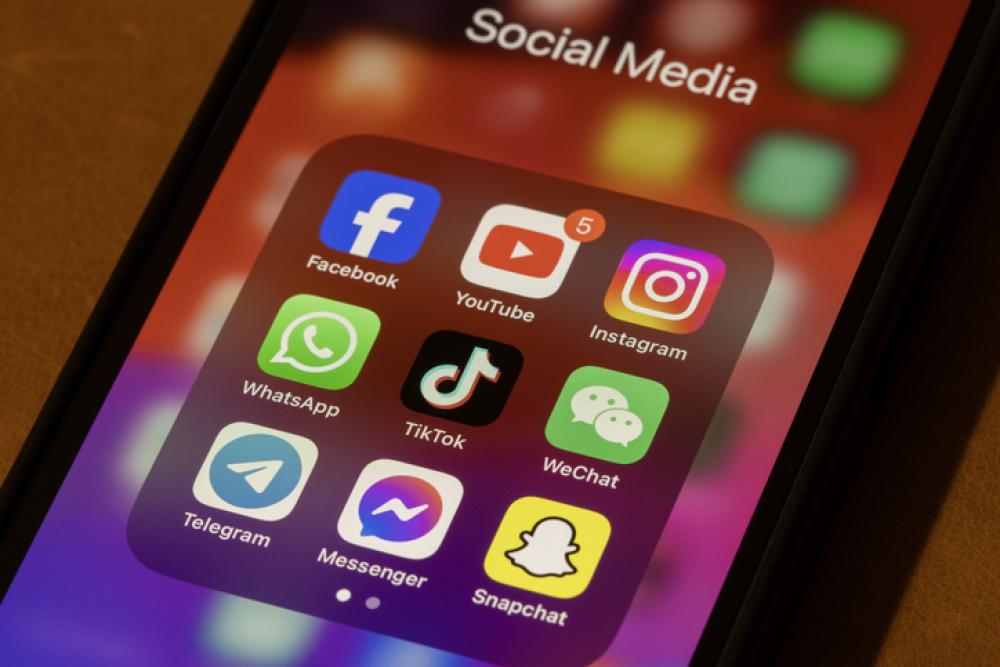
Florida’s proposed social media ban for kids younger than 16 will head to Gov. Ron DeSantis (R). The House voted 108-7 Thursday to concur with Senate changes to HB-1, which also would require age verification to block kids less than 18 from pornography online. DeSantis said he has concerns about the bill restricting parents from allowing kids to have social media accounts (see 2402220051). The Senate passed HB-1 by a 23-14 vote earlier Thursday.
Expect a U.S. Supreme Court majority to side with the tech industry in its content moderation fight against social media laws in Florida and Texas, experts told us in interviews last week.
Florida Gov. Ron DeSantis (R) isn’t ready to ban children younger than 16 from using social media without an opportunity for parental override, he said Thursday. This puts him at odds with many of his state's Republican lawmakers. Earlier in the day, Florida's Senate voted 23-14 to approve HB-1, which would require that websites verify potential users' ages, preventing kids younger than 16 from using social media and stop those younger than 18 from accessing pornography. Many, but not all, Democratic state senators opposed the bill. Later on the floor, senators joined House members in unanimously supporting another measure extending a $1 promotion for broadband attachments through 2028.
Minnesota legislators on Wednesday advanced an age-appropriate design bill modeled after a California law that was recently deemed unconstitutional.
Florida senators unanimously supported joining other states that designate mobile phone providers as eligible telecom carriers (ETCs) for the federal Lifeline program. On the floor Wednesday, senators voted 37-0 to pass a bill (SB-478) that would transfer wireless ETC designation powers from the FCC to the Florida Public Service Commission. Later, senators debated a bill (HB-1) that would override parents and ban all kids younger than 16 from getting social media accounts.
The Arizona Senate narrowly passed a bill requiring age verification to protect minors from harmful content online. Senators voted 16-12 Monday to send SB-1125 to Arizona's House. The bill would require websites with pornographic content to verify that users are at least 18, including by comparing IP addresses with a blacklist. Parents could request that their kids be added to the blacklist; ISPs “shall not be under any obligation to confirm” that the requesting internet user “has a minor child,” it said. CTIA in a Jan. 29 letter opposed the bill as technically unworkable. The current bill “misunderstands how IP addresses are used within the internet ecosystem and their infeasibility for identification and age verification,” the wireless association wrote. IP addresses change over time and can be “easily overridden through widely available tools like proxy servers and virtual private networks,” it said. “SB 1125 would impose incredible burdens on ISPs to create an unviable blacklist framework. The regulatory onus should instead be on the content providers that knowingly create and distribute the harmful content to use viable commercial age assurance mechanisms." Also Monday, the Arizona House Appropriations Committee voted 12-0 for a kids' privacy bill (HB-2858) that would prohibit minors younger than 16 from using social media platforms without parental consent. In addition, it would prohibit users older than 18 from sending messages on social media to younger users.
Petitioners Maurine and Matthew Molak want the 5th U.S. Circuit Court of Appeals to “disregard the statutory requirement” under Communications Act Section 405(a) that persons who weren’t parties before the FCC file a petition for reconsideration as a “condition precedent” to seeking judicial review, said the FCC and DOJ reply Friday (docket 23-60641) in support of their motion to dismiss the Molaks’ petition (see 2402070002).
Smaller online platforms operating in the EU must comply with the Digital Services Act (DSA) starting Feb. 17, the European Commission said during a virtual briefing. Smaller platforms are defined as those with fewer than 45 million users per month. National digital services coordinators (DSCs) will oversee compliance. Consumers cheered the expansion of the measure but urged proper enforcement.
A Florida Senate committee combined House bills requiring age verification for those accessing social media (HB-1) and pornography (HB-3). At a Thursday hearing, the Fiscal Policy Committee on a voice vote approved an amendment that inserts the text of HB-3 into HB-1 and makes other changes. Then the panel cleared the amended bill. The Senate could vote on the bill Wednesday. Opposing the bill in committee, Sen. Geri Thompson (D) said legislators’ role is education, not censorship. Sen. Shev Johnson (D) said it’s not lawmakers’ role to parent the parents, and the bill doesn’t pass legal muster. Added Sen. Lori Berman (D), HB-1 has many practical problems, including that it would force adults to verify their age on many websites and its breadth could bar children from accessing educational sites. Yet Sen. Erin Grall (R), who is shepherding HB-1 in the Senate, said Florida isn’t suggesting it knows better than parents. The state is narrowly responding to an identified harm, she said. "This is a bill about not targeting our children in order to manipulate them." The new version of HB-1 continues to propose prohibiting children younger than 16 from having social media accounts regardless of parental consent but no longer would require social websites to disclose social media's possible mental health problems to those 16-18. The amended bill allows enforcement by the attorney general and through a private right of action. Other changes to bill definitions could mean that young people will also be banned from Amazon, LinkedIn and news websites, said Maxx Fenning, executive director of PRISM, an LGBTQ rights group in Florida. In addition, the American Civil Liberties Union opposed the bill. Banning kids younger than 16 even with their parents' consent "shows that the claim of parental rights of the last two legislative sessions had nothing to do with parental rights and everything to do with government censorship of viewpoints and information that government doesn't like,” ACLU-Florida Legislative Director Kara Gross said.