The House voted 352-65 Wednesday to approve legislation that would ban TikTok in the U.S. if Chinese parent company ByteDance doesn’t divest the app in six months (see 2403120062).
Social Media
Social media platforms are facing intense scrutiny over how they collect, share and monetize user data. As new state and federal laws focus on age verification, parental controls and transparency requirements, social media companies face legal risks around algorithmic targeting, third-party tracking and children's safety. This page follows key legislation, investigations and lawsuits shaping privacy practices for major social platforms.
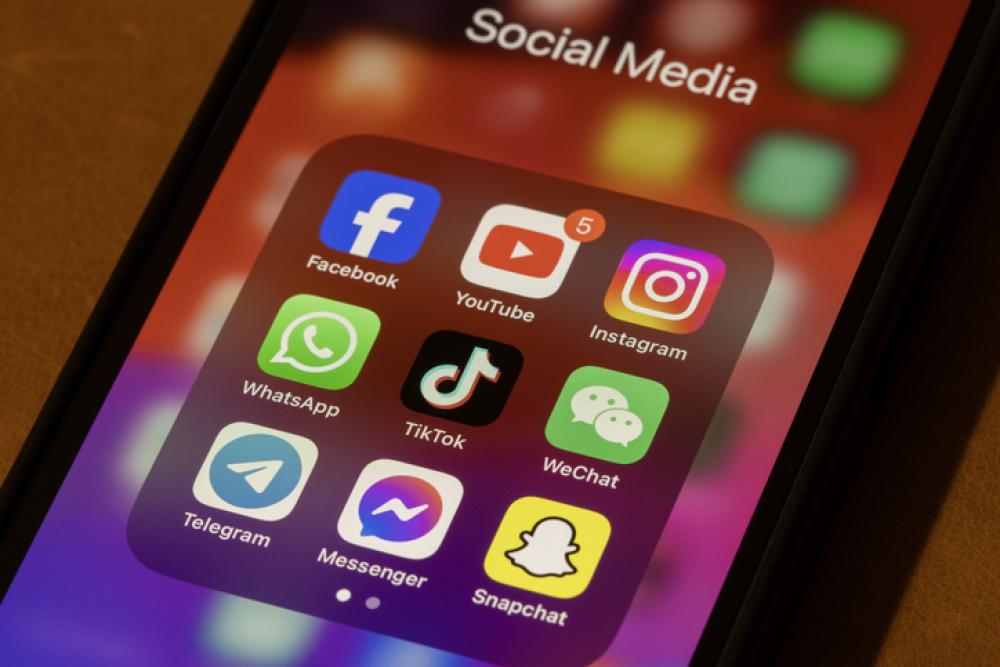
Tennessee Gov. Bill Lee (R) aims to avoid industry litigation that has stymied kids’ social media laws in other states, his aide told a Tennessee House committee during a hearing Tuesday on an administration-sponsored bill requiring parental consent for kids younger than 18 on social networks. But afterward, Computer & Communications Industry Association State Director Kara Boender told us her group “still [has] concerns surrounding the bill's provisions.”
The House will vote Wednesday on legislation that would ban TikTok in the U.S. unless Chinese parent company ByteDance divests the popular social media app, an aide for House Majority Leader Steve Scalise, R-La., confirmed Tuesday.
Social media companies should obtain parental consent before sending children push notifications that keep them on platforms, a bipartisan group of 43 state attorneys general told the FTC in comments due Monday (see 2312280030). Some tech and telecom groups warned that the FTC's push-notification proposal is likely to be unconstitutional and outside its statutory authority.
If Congress doesn’t approve kids’ online safety legislation, then it should repeal Communications Decency Act Section 230, Senate Judiciary Committee Chairman Dick Durbin, D-Ill., told us last week.
Florida Gov. Ron DeSantis (R) signaled he will sign the legislature’s revised ban restricting kids on social media. Lawmakers approved a revised proposal that includes parental consent after DeSantis vetoed an earlier proposal to ban kids younger than 16 from having social media accounts (see 2403070058). A list of legislative accomplishments this session DeSantis posted on X included “protected children from the harms of social media.” At a Friday news conference alongside the governor, House Speaker Paul Renner (R) said that, with HB-3, “we’ve taken strong action to save our kids and save their childhood.” NetChoice is “disappointed to see Gov. DeSantis sign onto this route,” General Counsel Carl Szabo said. “There are better ways to keep Floridians, their families and their data safe and secure online without violating their freedoms.”
Congress must act now to address national security issues surrounding TikTok, a bipartisan group of senators told us last week leading up to the House Commerce Committee's passage of two TikTok-related bills (see 2403070066). Meanwhile, presumptive Republican presidential nominee Donald Trump on Thursday defended TikTok, though he signed an executive order against the platform while president.
The Florida legislature passed a second try at restricting kids on social media. The House voted 109-4 to concur with the Senate-amended HB-3 on Wednesday. Lawmakers revised the proposal to include parental consent after Gov. Ron DeSantis (R) vetoed an earlier proposal (see 2403040054). NetChoice sought another veto in a Thursday letter to DeSantis. HB-3 similarly “would violate Floridians’ constitutional rights and place their privacy at risk,” the tech industry group said. DeSantis didn’t comment Thursday. Two other states advanced social media bills Wednesday. The Iowa House voted 88-6 to pass a bill (HF-2523) that would restrict minors younger than 18 from having social media accounts unless they have parental consent. It's now in the Senate. The Arizona Senate voted 16-14 to pass SB-1124, which would require social platforms to publish standards for deplatforming political candidates.
Sens. Ron Wyden, D-Ore., and Cory Booker, D-N.J., on Wednesday blocked a request from Sen. Lindsey Graham, R-S.C., for unanimous consent on a trio of child-online-safety-related bills. On the Senate floor, Graham had the bipartisan support of Senate Judiciary Committee Chairman Dick Durbin, D-Ill., and Sens. Chuck Grassley, R-Iowa; Amy Klobuchar, D-Minn.; John Cornyn, R-Texas; and Josh Hawley, R-Mo. They sought passage of the Earn It Act, the Stop Children Suffering from Abuse and Mistreatment (Stop CSAM) Act and the Shield Act (see 2402060084). However, Wyden objected to passage of the Earn It Act and the Stop CSAM Act because they would “weaken” encryption standards by exposing social media companies to liability for securing messages. Weakening encryption will allow child predators to better track and exploit victims, said Wyden. Meanwhile, Booker objected to the Shield Act, a Klobuchar and Cornyn bill that would establish criminal liability for individuals who share or threaten to share intimate content without consent. Sextortion scams resulted in at least 20 victims, including children, dying by suicide in 2022, Klobuchar noted. Booker said he shares the goal of holding criminals liable, but the bill would create “unintended consequences.” The N.J. Democrat said he’s working with Klobuchar on changes in the bill but didn’t specify his concerns on the floor. There’s no disagreement these bills attempt to address the harm caused by “people who are evil to their core," said Wyden, but he said there’s disagreement about how to address that. Wyden said Congress should pass his legislation increasing resources for investigators and prosecutors (see 2402270069). In addition, Wyden said he agrees child abuse is a “horrible plague on the internet,” and criminals need to be “hunted down and locked up.”
The House Commerce Committee on Thursday unanimously passed legislation (see 2403050051) that could lead to a U.S. ban on the popular Chinese-owned social media app TikTok. The legislation is poised for floor action after gaining public support from House Speaker Mike Johnson, R-La., on Thursday.