California state senators passed bills on telecom, privacy and social media Wednesday. The state Senate voted 38-0 for AB-2765, which would require that the California Public Utilities Commission report on inspections that ensure companies comply with resiliency plans. The Assembly then concurred with Senate changes, allowing the bill to go to Gov. Gavin Newsom (D). Also, the Senate voted 38-1 to approve a bill (AB-3216) requiring that schools adopt limits or bans on student use of smartphones. On privacy, the Senate voted 31-7 for AB-3048, which would require web browsers to opt-out from the sale of and sharing data on all websites. Senators voted 39-0 for AB-1824, which would require a business acquiring another company to follow an acquired customer’s privacy directions under the California Consumer Privacy Act. In addition, they voted 40-0 for a bill (AB-1282) that would require a study on mental health risks of social media for children. The Assembly previously passed AB-1282, AB-1824, AB-3216 and AB-3048 but must vote again to concur with Senate changes. Also Tuesday, Newsom received AB-2905, which the legislature passed last week. It would expand the state’s autodialer definition to include calls made with an AI voice. The California legislature wraps up its session Saturday.
Social Media
Social media platforms are facing intense scrutiny over how they collect, share and monetize user data. As new state and federal laws focus on age verification, parental controls and transparency requirements, social media companies face legal risks around algorithmic targeting, third-party tracking and children's safety. This page follows key legislation, investigations and lawsuits shaping privacy practices for major social platforms.
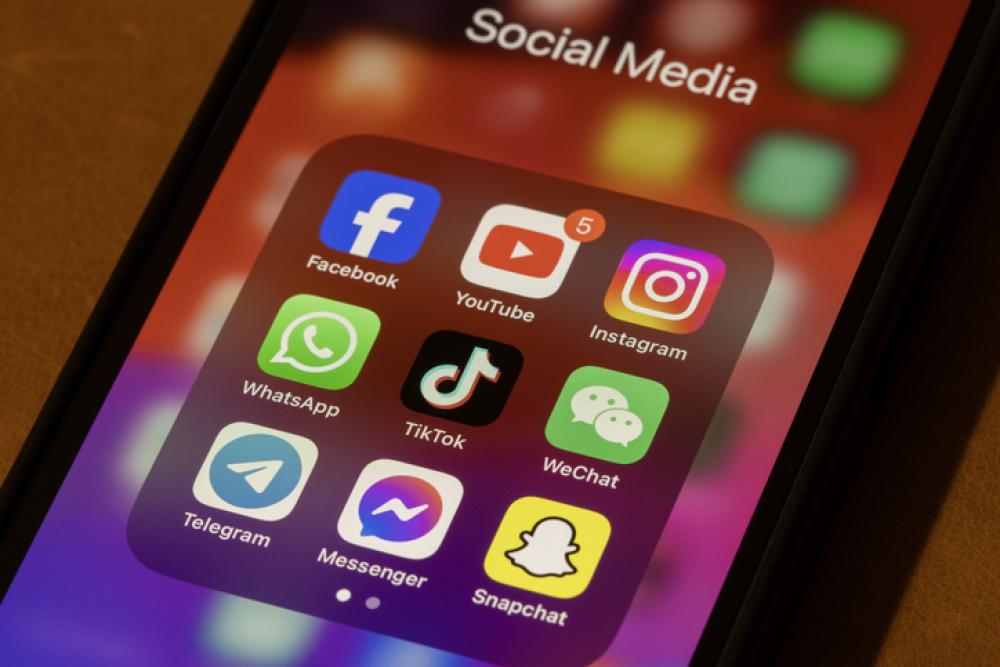
A state court allowed an Iowa lawsuit against TikTok that claims the social media company duped parents about children’s access to inappropriate content. The Iowa District Court for Polk County in Des Moines denied TikTok’s motion to dismiss the state’s Jan. 17 petition in a ruling this week. While the court also denied Iowa’s motion for preliminary injunction, Iowa Attorney General Brenna Bird (R) said in a Wednesday statement that the decision is “a big victory in our ongoing battle to defend Iowa’s children and parents against the Chinese Communist Party running TikTok. Parents deserve to know the truth about the severity and frequency of dangerous videos TikTok recommends to kids on the app.” Bird claimed TikTok violated the Iowa Consumer Fraud Act through misrepresentations, deceptions, false promises and unfair practices, which allowed it to get a 12+ rating on the Apple App Store despite containing content inappropriate for kids aged 13-17. “Considering the petition as a whole, the State has submitted a cognizable claim under the CFA,” wrote Judge Jeffrey Farrell. TikTok doesn’t get immunity from Section 230 of the Communications Decency Act because the state’s petition “addresses only the age ratings, not the content created by third parties,” the judge added. However, Farrell declined to preliminarily enjoin TikTok since the state hasn’t “produced any evidence to show an Iowan has been viewed and harmed” by videos with offensive language or topics. The judge said, “The State presented no evidence of any form to show irreparable harm.” TikTok didn’t comment Wednesday.
The Schools, Health & Libraries Broadband Coalition, joined by public interest groups, and T-Mobile opposed a petition at the FCC seeking reconsideration of last month’s 3-2 order allowing schools and libraries to use E-rate support for off-premises Wi-Fi hot spots and wireless internet services (see 2407180024). They were the only filers in docket 21-31 as of Wednesday. Tuesday was the deadline for oppositions. Maurine and Matthew Molak, who sued the agency over its decision that authorized funding Wi-Fi on school buses, are seeking reconsideration (see 2408020035). The FCC should dismiss the Molak petition “as it relies on arguments that have been fully considered and rejected by the Commission within the same proceeding,” said SHLB. The Open Technology Institute at New America and the Benton Institute for Broadband & Society joined SHLB. “Petitioners fail to identify any material error, omission, or reason warranting reconsideration of their arguments alleging the Commission’s lack of statutory authority,” the groups said. The petition “merely asserts its claims and does not raise any additional argument purporting that the Commission had either erred in its reasoning that the above-mentioned statutory provisions grant[ ] it legal authority, or that the Commission omitted or failed to consider certain facts or reasoning when making its determination.” Even before the COVID-19 pandemic, “a majority of students required the Internet to complete their homework every single day,” T-Mobile said. “Progress made in addressing the Homework Gap during the pandemic by local school districts that provided students with Wi-Fi hotspots is now in jeopardy, and so the Wi-Fi lending program contained in the Order is crucial to sustaining pandemic-era connectivity gains and connecting students.” The FCC order contains appropriate safeguards, T-Mobile said: “It requires applicants to maintain acceptable use policies that clearly state that off-premises use must be primarily for an educational purpose.” The Molaks, whose 16-year-old son died by suicide after he was cyberbullied, argued that the school bus ruling would give children and teenagers unsupervised social media access.
AT&T suffered a wireless outage Tuesday night that apparently started in the Southeast and spread throughout the U.S., based on social media and other reports. A software issue caused the outage, which was resolved, AT&T said Wednesday. The FCC is investigating, a spokesperson emailed.
NAB will provide broadcasters with digital resources, virtual education and a summit at NAB New York as part of an “election preparedness initiative” aimed at delivering “accurate and reliable” coverage of the 2024 election, the trade group said in a release Tuesday. “As bad actors increasingly use advanced technologies to create and spread disinformation, the role of local broadcasters as custodians of the truth has never been more important,” NAB President Curtis LeGeyt said in the release. The initiative includes an election toolkit with resources on trust-building and broadcast best practices, and targeted resources “aimed at increasing voter participation and engagement within the Hispanic community.” On Sept. 9, NAB and the Radio Television Digital News Association will hold a free online virtual learning session on “building trust with their audiences and combating disinformation during the 2024 election season.” On Oct. 10, NAB will host an in-person summit at the NAB Show New York on improving trust in political coverage, “ensuring verified news in the age of AI and social media,” and combating misinformation and deep fakes. “The Election Coverage Summit is an essential forum for those committed to delivering trusted news during this critical time,” the release said.
Meta CEO Mark Zuckerberg’s admission that the White House “repeatedly pressured” the company to censor COVID-19 content is part of a broader debate about “freedom” and "authoritarianism,” FCC Commissioner Brendan Carr told Fox Business on Tuesday. The White House defended its actions.
The 9th U.S. Circuit Court of Appeals’ decision to partially uphold an injunction against a California age-appropriate social media design law (see 2408160015) means similar legislation at the federal level is likely unconstitutional, a policy expert at the International Center for Law & Economics said Monday. Innovation policy scholar Ben Sperry argued that duty of care provisions in the Kids Online Safety Act, which the Senate passed last month 91-3 (see 2407300042), likely violate the First Amendment. The 9th Circuit found the Age-Appropriate Design Code Act’s (AB-2273) impact assessment requirement is violative because it requires that platforms make judgments about what online content could harm children. Sperry argued that under KOSA, platforms would be incentivized to censor all but “the most benign speech” to avoid triggering children’s anxiety or to avoid “bullying” claims.
Texas’ social media age-restriction law violates the First Amendment because it limits access to content in a way that prohibits free speech, the Computer & Communications Industry Association and NetChoice said Friday in a lawsuit seeking to block the new measure (docket 1:24-cv-00849) (see 2407300030). In a filing with the U.S. District Court of Western Texas, the trade associations requested a preliminary injunction against HB-18. Set to take effect Sept. 1, HB-18 requires that social media platforms obtain parental consent before allowing minors to use their services. CCIA Senior Vice President Stephanie Joyce said in a statement that Texas failed to justify the law’s “invasive and onerous” age-gate restrictions: “In keeping with the Supreme Court’s recent holding that Texas’s previous attempt to regulate speech likely violates the First Amendment, HB18 should be barred from becoming effective. Such attempts to dictate what users can access online are antithetical to a free society.”
ASPEN -- Finding a way to restore the affordable connectivity program (ACP) is a high priority for the end of 2024 and social media-related advertising revenue could provide potential solutions, FCC Commissioners Geoffrey Starks and Anna Gomez said Monday.
Provisions in California’s age-appropriate social media design law likely violate the First Amendment, the 9th U.S. Circuit Court of Appeals ruled Friday in a victory for NetChoice (docket 23-2969) (see 2407170046). A three-judge panel found the Age-Appropriate Design Code Act’s (AB-2273) impact assessment requirement likely violates the First Amendment because it requires that platforms make judgments about what online content could harm children. The ruling, issued by Judge Milan Smith, affirms a district court decision enjoining enforcement of the law’s Data Protection Impact Assessment requirement. However, the court remanded the case back to the district court for further consideration on other aspects of the law. It’s “unclear from the record” whether other challenged provisions “facially violate the First Amendment,” or the unconstitutional aspects can be separated from valid provisions of the law, the court said. NetChoice is “likely to succeed” in showing that the law’s requirement that “covered businesses opine on and mitigate the risk that children may be exposed to harmful or potentially harmful materials online facially violates the First Amendment,” Smith wrote. The U.S. District Court for the Northern District of California in September granted NetChoice's request for a preliminary injunction. The lower court ruled the state has “no right to enforce obligations that would essentially press private companies into service as government censors, thus violating the First Amendment by proxy.” California Attorney General Rob Bonta (D) appealed. NetChoice Litigation Center Director Chris Marchese called the decision a victory for free expression: “The court recognized that California’s government cannot commandeer private businesses to censor lawful content online or to restrict access to it.” Bonta’s office didn’t comment Friday.