Agreeing with X’s First Amendment arguments, the 9th U.S. Circuit Court of Appeals supported blocking a California law requiring social media companies to provide the state with semiannual disclosures of their content-moderation policies. In a Wednesday opinion, the appeals court reversed a U.S. District Court for Eastern California decision to deny X’s request for a preliminary injunction to block enforcement of AB-587. The 9th Circuit remanded to the district court with instructions to enter a preliminary injunction against the reporting requirement and to determine if other challenged provisions should also be enjoined. X is likely to succeed on the merits of its claim that the reporting requirement facially violates the First Amendment, found a 9th Circuit panel including Judges Milan Smith, Mark Bennett and Anthony Johnstone. The disclosure requirements “likely compel non-commercial speech and are subject to strict scrutiny, under which they do not survive,” Smith wrote (case 24-271). Because the court is reversing based on free-speech grounds, it needn’t address X's arguments that Section 230 of the Communications Decency Act preempts the law, the judge said. X and California AG Rob Bonta (D) didn’t comment by our deadline.
Social Media
Social media platforms are facing intense scrutiny over how they collect, share and monetize user data. As new state and federal laws focus on age verification, parental controls and transparency requirements, social media companies face legal risks around algorithmic targeting, third-party tracking and children's safety. This page follows key legislation, investigations and lawsuits shaping privacy practices for major social platforms.
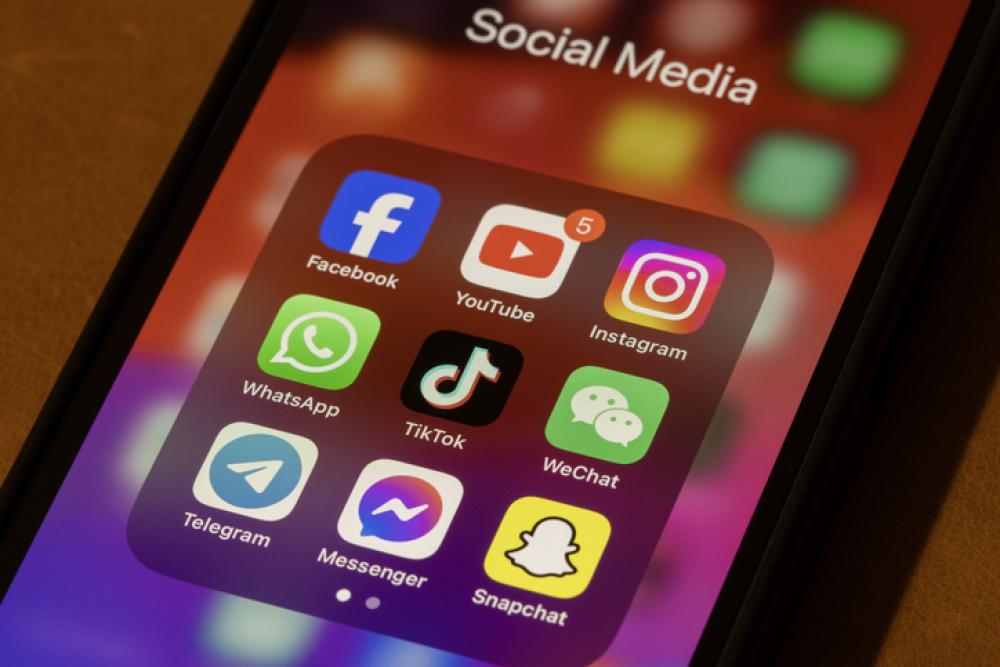
New York should ban children from using cellphones during the school day, Gov. Kathy Hochul, D-N.Y., said Wednesday. New York is one of several states considering legislation and policies either restricting or banning children from using cellphones in school (see 2406070065). Virginia Gov. Glenn Youngkin (R) signed an executive order in July that would implement restrictions by January. Legislators in Utah are considering a cellphone ban proposal, and California is advancing legislation (see 2408280033). Hochul during a Semafor livestream was asked if she thinks New York should implement a ban. “I personally do,” she said, noting she will be meeting with school union officials who support the proposal in the coming weeks. Hochul said she recognizes some parents are “anxious” about the prospect, especially if it could affect communication during a school shooting or crisis. If there’s a mass shooter, students should be following instructions from teachers and staff, not texting or recording the incident, said Hochul: Their attention should be on the adults who can bring them to safety. The purpose of school is to raise adults who can interact with each other and “make eye contact,” said Hochul. This generation isn’t communicating on a “human level” because of its dependency on cellphones throughout the day, she said: Students are supposed to be “paying attention and learning in school.” FTC Consumer Protection Director Samuel Levine said Hochul is correct that social media companies intentionally try to addict children. The agency welcomes states, both Democratic- and Republican-led, responding to this “real mental health crisis” for kids and teens, he said.
X permanently agreed to stop using personal data in public posts of EU and European Economic Area users to train its AI tool, Grok, the Irish Data Protection Commission (DPC) said Wednesday. Accordingly, the Irish High Court dismissed a proceeding against the social media site, the DPC said (see 2408080020). The regulator is now more generally "addressing issues arising from the use of personal data in AI models across industry" and asked the European Data Protection Board for an opinion under the EU general data protection regulation to "trigger discussion" on several core issues.
FCC Commissioner Brendan Carr supported SpaceX CEO Elon Musk in online posts and remarks over the weekend, condemning the actions of a Brazilian judge against Musk’s X social media platform as part of a global movement toward censorship. Brazilian Supreme Court Justice Alexandre de Moraes issued an order banning X Friday. “de Moreas’ own words make clear that he is attempting to strike a broader blow against free speech and in favor of authoritarian controls,” Carr wrote in a long X post on de Moraes’ opinion. “With X refusing to cave to secret and unlawful demands, you’re now seeing public and unlawful demands instead,” Carr wrote. He also reposted Musk's comments, condemning de Moraes as a dictator during an audio-only X Spaces stream. “This is part of a global movement where people believe that they can get away with what would otherwise be characterized as naked authoritarian actions, provided that they use the rubric of doing this to, quote, preserve democracy or save democracy,” Carr said. “If you are going particularly after the right type of political enemies, which happen right now, for whatever reason, to be sort of the populist right,” then “there's been a level of acceptance,” said Carr. “What is happening in Brazil that should be immediately and clearly rejected by the right, the left and the center, because once we erode these ideas of free speech and individual liberty every single one of us end up being harmed at the end of the day.” Carr has increasingly engaged with Musk on X (see 2408190040) in recent weeks (see 2408270048), visited SpaceX in August and posted a picture of himself and Musk together last week.
California state legislators approved privacy and social media bills before adjourning Saturday. Gov. Gavin Newsom (D) will now consider signing the measures into law. On privacy, the Assembly voted 55-15 Saturday to concur with Senate amendments to AB-1008, which would clarify that personal information under the California Consumer Privacy Act (CCPA) can exist in different formats, including physical and digital. Meanwhile, the Senate voted 38-0 to concur with Senate changes to SB-1223, which would amend the CCPA to include “neural data” as a type of sensitive personal information. However, a bill on automated decision-making (AB-2930) stalled in the Senate. The legislature passed several bills about social media. The Assembly voted 58-0 to concur with Senate amendments to AB-2481, which would create a mechanism for people who report threatening content on social networks. The Senate voted 28-2 to finally pass SB-976, which would provide parental controls, including the ability to decide whether their children see a chronological news feed or one based on an algorithm, the current default. Senators unanimously concurred with the Assembly to pass SB-1283, which would require schools to adopt limits or bans on student use of smartphones in an effort to keep kids off social platforms when on campus. The legislature previously passed a similar Assembly (see 2408280033). And the Senate voted 36-0 to send the governor SB-1504, which would tighten a cyberbullying law that requires social platforms to have reporting mechanisms. However, the legislature failed to bring to a final vote AB-3172, which would have established civil penalties for a big social media platform that “breaches its responsibility of ordinary care and skill to a child” younger than 18. Lawmakers approved many other telecom and internet bills last week (see 2408300039).
Texas’ social media age-restriction law likely violates the First Amendment, a federal judge ruled Friday, partially blocking the measure and marking a victory for the tech industry (see 2408230014). The Computer & Communications Industry Association and NetChoice sued to block HB-18, which was set to take effect Sunday. The trade associations, which requested a preliminary injunction, met their burden in showing HB-18’s speech restrictions “fail strict scrutiny, are unconstitutionally vague, and are preempted by Section 230,” wrote Judge Robert Pitman, on behalf of the U.S. District Court for the Western District of Texas (docket 1:24-cv-00849). The decision enjoins HB-18’s monitoring and filtering provisions, but Pitman found the law’s remaining provisions can take effect because they don’t “unconstitutionally regulate a meaningful amount of constitutionally protected speech.” The court “recognized that this Texas law restricts protected speech in a way that likely violates the First Amendment and that it deserves the most stringent constitutional scrutiny,” said CCIA Chief of Staff Stephanie Joyce. “This ruling will ensure that internet users can continue accessing information and content online while we further prove that this law is unlawful and unconstitutional.”
Expect the U.S. Supreme Court to issue a major interpretation on Section 230 as lower courts continue to make conflicting rulings about social media platforms’ free speech rights, legal experts told us in interviews.
California lawmakers supported stopping kids from accessing social media through smartphones at school before the 2024 legislative session wrapped up last week. On Friday, the Assembly voted 51-0 for SB-1283, which would require that schools to adopt limits or bans on student use of smartphones. The legislature passed a similar bill (AB-3216) earlier last week (see 2408280033). Amendments to SB-1283 ensure the bill won’t expand surveillance of children but simply keeps them off social media at school, said Assemblymember Rebecca Bauer-Kahan (D) on the floor. Also Friday, the legislature passed a bill to require social media platforms to have a staffed hotline for responding to law enforcement information requests, and to comply within 72 hours to search warrants. No senator opposed concurring with Assembly changes to SB-918. Voting continued after our deadline. On Thursday, state lawmakers passed video franchise and privacy bills. The Assembly voted 50-16 Thursday to concur with Senate changes to AB-1826 to update the state’s 2006 video franchise law, the Digital Infrastructure and Video Competition Act. If signed by Gov. Gavin Newsom (D), the bill will increase DIVCA fines for service-quality problems and seeks increased participation from the public and its advocates in the franchise renewal process. The Assembly also concurred with the Senate on AB-1949, which would set stricter limits on sharing children’s personal data under the California Consumer Privacy Act. Also on Thursday, the Assembly voted 71-0 to pass SB-1504, which would tighten a cyberbullying law that requires social platforms to have reporting mechanisms. It still needed another vote in the Senate. The same day, the Senate voted 30-2 to pass AB-2481, which would create a mechanism for people who report threatening content on social media platforms. That bill still needed another vote in the Assembly. The legislature earlier passed bills on AI, privacy, social media and network resiliency (see 2408290005 and 2408280033).
Canada’s digital services tax (DST) appears to violate the country’s trade commitments with the U.S., the Office of the U.S. Trade Representative said Friday, requesting a review under the United States-Mexico-Canada Agreement. The DST, reflected in a budget passed in June, seems discriminatory toward U.S. companies and is inconsistent with chapters 14 and 15 of the USMCA, the USTR said. The DST imposes a 3% tax on “the sum of revenues deemed connected to Canada from online marketplaces, online targeted advertising, social media platforms, and user data,” according to the filing. It applies to companies with global revenue of €750 million or more and Canadian digital services revenue of more than CAD20 million. The measure violates Canada’s commitments to the USMCA, which requires equal treatment for U.S. and Canadian services, service suppliers and investors, said USTR. The Computer & Communications Industry Association welcomed the filing, citing Canadian Parliamentary Budget Office figures showing American companies will be responsible for the “vast bulk” of the $3 billion estimated for the first payment in June. “We expect that under USMCA, the facts and the law will demonstrate that Canada should remove this measure expeditiously. And, absent compliance, we look to USTR to follow through on its pledge to use all tools available to remedy this trade-distortive measure,” said CCIA Vice President-Digital Trade Jonathan McHale. CCIA, CTA and TechNet joined more than 10 associations in writing a letter to USTR in June opposing the DST.
The California legislature will send state bills on smartphones in schools, privacy and social media to Gov. Gavin Newsom (D). On Wednesday, the Assembly concurred with Senate changes to AB-3216, which would require schools adopt limits or bans on student use of smartphones; AB-3048, which would require web browsers to opt-out from the sale of and sharing data on all websites; AB-1824, which would require a business acquiring another company to follow an acquired customer’s privacy directions under the California Consumer Privacy Act; and AB-1282, which orders a study on mental health risks of social media for children. The Senate approved the bills Tuesday (see 2408280033). In addition, the Assembly voted 48-16 for a measure (SB-1047) allowing the attorney general to pursue civil penalties against large AI developers if they cause “severe harm” to residents. On Thursday, the Senate voted 29-9 to concur with the Assembly and send the AI bill to the governor. SpaceX and Tesla founder Elon Musk said California should “probably pass” the bill that Sen. Scott Wiener (D) proposed (see 2408270047). Meanwhile on Wednesday, the Senate voted 25-10 to pass AB-1826, which would update California's 2006 video franchise law, known as the Digital Infrastructure and Video Competition Act (DIVCA). The bill would increase fines for service-quality problems and seeks increased participation from the public and its advocates in the franchise renewal process. And senators voted 33-0 to pass AB-1949, which would set stricter limits on sharing children’s personal data under the CCPA. The Senate-passed bills will go back to the Assembly to concur with Senate amendments. On Thursday, California Privacy Protection Agency Executive Director Ashkan Soltani applauded passage of the bill requiring opt-out preference signals, which, he said, will make it "significantly easier for Californians to exercise their opt–out rights online." The Computer & Communications Industry Association opposed the AI bill in a statement Thursday. The measure's goals "appear well-intentioned, but poorly informed and ill-executed," said CCIA State Policy Director Khara Boender. "It would disrupt the development of the U.S. AI ecosystem by imposing untenable liability as U.S. companies compete with foreign companies."