T-Mobile on Wednesday unveiled a collaboration with Nvidia, Ericsson and Nokia that will “design and drive the future” of mobile wireless networks “with AI at the center.” An AI-based radio access network “will dramatically improve customers’ real-world network experiences and ever-growing demand for increased speeds, reduced latency, and increased reliability needed for the latest gaming, video, social media and augmented reality applications they like to enjoy on their mobile and fixed wireless devices,” T-Mobile said. AI-RAN will “leverage” billions of data points to develop algorithms “that determine optimal network adjustments for maximum performance and to predict real-time capacity where customers need it.” AI will also “supercharge mobile network infrastructure” to simultaneously run third-party AI application workloads at the network’s edge. The companies are founding members of the AI-RAN Alliance and are building an AI-RAN Innovation Center in Bellevue, Washington.
Social Media
Social media platforms are facing intense scrutiny over how they collect, share and monetize user data. As new state and federal laws focus on age verification, parental controls and transparency requirements, social media companies face legal risks around algorithmic targeting, third-party tracking and children's safety. This page follows key legislation, investigations and lawsuits shaping privacy practices for major social platforms.
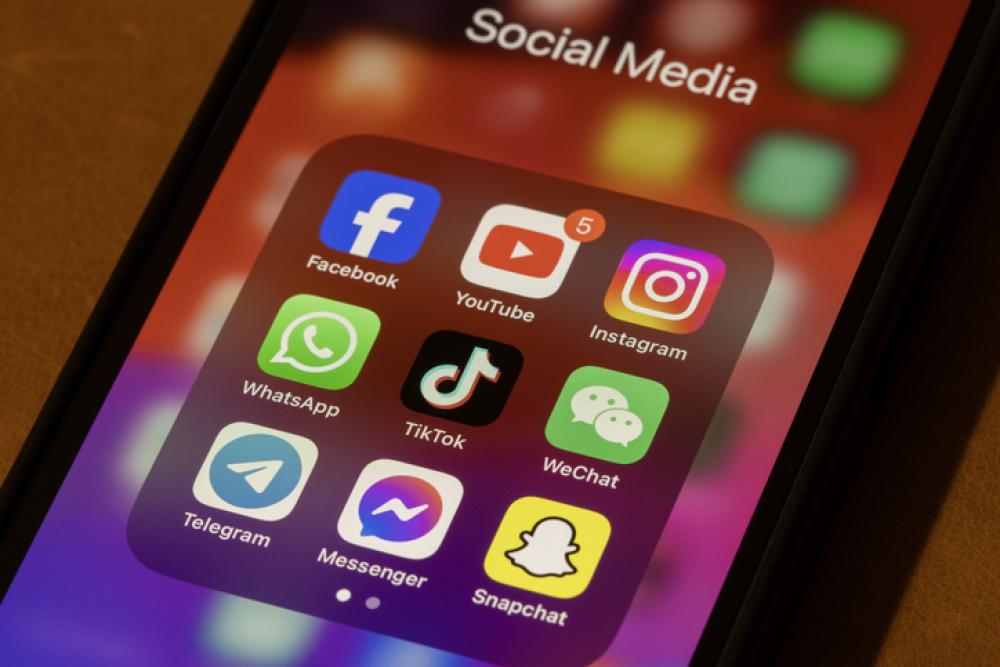
The House Commerce Committee on Wednesday approved a pair of kids’ online safety bills on a voice vote, opening the door for potential floor action and negotiations with the Senate.
A three-judge panel from the U.S. Court of Appeals for the D.C. Circuit was skeptical on Monday of TikTok’s argument that the Protecting Americans from Foreign Adversary Controlled Applications Act's planned ban of the platform in the U.S. is unconstitutional (see 2406210004). The statute requires China-affiliated ByteDance must sell TikTok by Jan. 19 to avoid the ban. The D.C. Circuit’s review also looped in a related challenge to that law from a group of TikTok creators. DOJ and ByteDance want the D.C. Circuit to rule by early December so they can have time for a likely challenge in the U.S. Supreme Court before the Jan. 19 divestiture deadline.
Many of the suggested ways of dealing with harms related to social media and smartphones are questionable under the First Amendment, and a scholarly effort is needed to find solutions, Steven Collis blogged Thursday. The founding faculty director of the University of Texas at Austin's Bech-Loughlin First Amendment Center said a better understanding of related problems is needed, such as the dopamine rush that comes with reading and commenting on smartphone posts.
Attorneys, academics and First Amendment experts told us that Republican presidential candidate Donald Trump’s calls for ABC to lose its license over Tuesday's presidential debate telecast (see 2409110058) are nonsensical and that government action against a broadcaster would likely ultimately fail. In addition, some said presidential calls for action against broadcasters over their reporting aren’t unprecedented. “All political players tend to do this when it suits them,” said veteran First Amendment attorney Robert Corn-Revere, now chief counsel for the Foundation for Individual Rights and Expression. “None of them have the constitutional authority to back it up.”
The U.S. District Court of Utah granted NetChoice’s request for a preliminary injunction against the state’s Minor Protection in Social Media Act, which was set to go into effect in October. The injunction bars Utah from enforcing the law until NetChoice’s legal challenge is resolved (see 2407230034). The court “recognizes the State’s earnest desire to protect young people from the novel challenges associated with social media use,” said the ruling Tuesday from Judge Robert Shelby. “But owing to the First Amendment’s paramount place in our democratic system, even well-intentioned legislation that regulates speech based on content must satisfy a tremendously high level of constitutional scrutiny.” Utah Attorney General Sean Reyes (R) hasn’t, Shelby wrote. “Utah’s law not only violates the First Amendment, but if enforced would backfire and endanger the very people it’s meant to help,” NetChoice Litigation Center Director Chris Marchese said in a news release. This ruling is NetChoice’s sixth successful request for an injunction against a state social media law. “We look forward to seeing this law, and others like it, permanently struck down and online speech and privacy fully protected across the country,” Marchese said. Shelby said that the law was underinclusive in what companies and websites it applied to and that its provisions against autoplay didn’t appear to prevent the behavior it targeted. “Defendants do not offer any evidence that requiring social media companies to compel minors to push ‘play,’ hit ‘next,’ and log in for updates will meaningfully reduce the amount of time they spend on social media platforms,” Shelby wrote. “We’re disappointed in the district court’s decision preliminarily enjoining Utah’s Minor Protection in Social Media Act," a spokesperson for Reyes said. "The AG’s office is analyzing the ruling to determine next steps. We remain committed to protecting Utah’s youth from social media’s harmful effects.”
Despite numerous social media platform competitors, X has maintained its user base due to its personalized algorithms and people engaging with one another on the platform, Midia analyst Hanna Kahlert blogged Tuesday. However, that changed with X's recent ban in Brazil, as Bluesky has seen a surge in user downloads and usage, she said. It's unknown whether that translates into consistent, long-term usage. But with Bluesky also seeing growth in Portugal and other South American nations such as Chile and Argentina, it appears a competitor can finally draw users from X, she said.
Forty-two attorneys general supported U.S. Surgeon General Vivek Murthy’s recommendation that social media carry warnings like the labels on cigarette packages. Murthy suggested last June that social media companies display warnings about mental health risks associated with their platforms (see 2406170059). The 42 bipartisan AGs, writing Monday under National Association of Attorneys General letterhead and representing states including California, New York and Indiana, supported the idea in a letter to House Speaker Mike Johnson, R-La., and Senate leaders Chuck Schumer, D-N.Y., and Mitch McConnell, R-Ky. “Young people are facing a mental health crisis, which is fueled in large part by social media,” wrote the AGs from 39 states, the District of Columbia, American Samoa and the U.S. Virgin Islands. “This generational harm demands immediate action. By mandating a surgeon general’s warning on algorithm-driven social media platforms, Congress can help abate this growing crisis and protect future generations of Americans.” New York AG Letitia James hopes “warning labels will be implemented swiftly to raise more awareness about this issue," the Democrat said in a news release Tuesday. Arkansas AG Tim Griffin (R) said, "A Surgeon General’s warning on social media platforms isn’t a cure-all, but it’s a step in the right direction toward keeping our kids safe in digital spaces.”
The FCC and other parties that Standard General and founder Soohyung Kim accuse of participating in a racist conspiracy to torpedo the company's $8.6 billion purchase of Tegna (see 2404250059) are urging dismissal of Standard's suit. Multiple defendants argued in motions to dismiss Monday that Standard's suit before the U.S. District Court of the District of Columbia is in the wrong court. The U.S. Court of Appeals for the D.C. Circuit in April denied a Standard/Tegna petition for writ of mandamus aimed at pushing the FCC to move on review and approval of the deal (see 2304210058).
The Congressional Research Service predicts the U.S. Supreme Court’s June Loper Bright Enterprises v. Raimondo ruling (see 2406280043) and “uncertainty about the scope of the FCC’s authority and ability to adopt regulations in the public interest” could prompt congressional legislation "to clarify the agency’s statutory authority.” Conversely, lawmakers could also maintain “the status quo and let ambiguities regarding the FCC’s rulemaking authority be resolved by the courts,” CRS said in a Wednesday report. “There are also questions on whether the FCC may alter its rulemaking efforts in response to Loper Bright, as well as how such alterations might affect interest in legislation.” The FCC’s July FCC order that lets schools and libraries obtain E-rate support for off-premises Wi-Fi hot spots and wireless internet services (see 2407180024), April net neutrality rules and a 2023 digital discrimination order “illustrate the types of rules that might be challenged as exceeding FCC authority under Loper Bright or the major questions doctrine,” researchers said. Maurine and Matthew Molak petitioned the 5th U.S. Circuit Court of Appeals last week to review the E-rate Wi-Fi order (see 2408300027). The Molaks, whose 16-year-old son died by suicide after he was cyberbullied, say that ruling would give children and teenagers unsupervised social media access. Numerous FCC rules even before Loper Bright "were being contested by affected parties, including” the 5G Fund and next-generation 911 transition, “in both of which the FCC cites its public interest mandate,” CRS said. Researchers also noted the FCC’s 2022 notice of inquiry about ways to aid nascent in-space servicing, assembly and manufacturing companies (see 2208050023) “has come under scrutiny from interested parties.”