The American Civil Liberties Union, Committee to Protect Journalists and others are expressing dismay at what they see as the FCC putting politically motivated pressure on media organizations and broadcasters "who exercise protected speech that the current administration disfavors."
Social Media
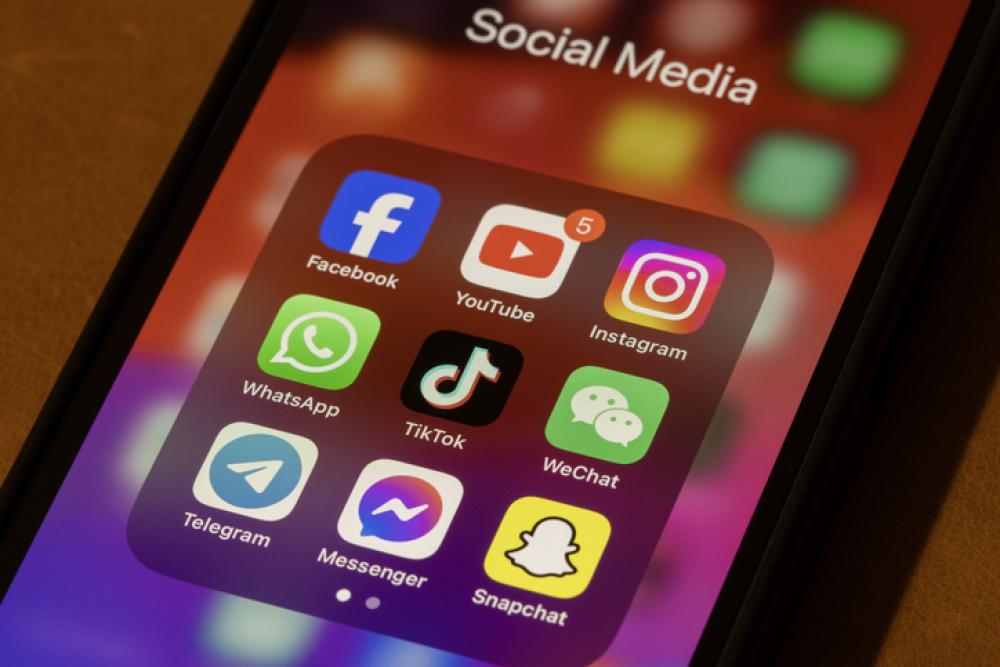
Social media platforms are facing intense scrutiny over how they collect, share and monetize user data. As new state and federal laws focus on age verification, parental controls and transparency requirements, social media companies face legal risks around algorithmic targeting, third-party tracking and children's safety. This page follows key legislation, investigations and lawsuits shaping privacy practices for major social platforms.
The FCC shouldn't act as a “Ministry of Truth,” and there isn't a constitutional basis for the agency to go after local broadcasters, said Commissioner Nathan Simington during an interview Tuesday that seemed aimed at soothing broadcasters' concerns about the FCC's new direction. “I’m not in the business of deciding who’s telling the truth and who’s not,” Simington said onstage at the NAB State Leadership Conference. “And what’s more, [FCC Chairman Brendan] Carr thinks the same way." Carr said last week that FCC precedent set by the previous administration supports proceedings he has opened against broadcast networks over their programming and news content.
The Ecommerce Innovation Alliance and other petitioners asked the FCC to issue a declaratory ruling finding that people who provide prior express written consent to receive text messages cannot claim damages under the Telephone Consumer Protection Act for messages received outside the hours of 8 a.m. to 9 p.m. “The TCPA, while intended to shield consumers from unwanted calls and texts, has become a weapon for opportunistic litigators,” said a petition posted Monday in docket 02-278. A single law firm based in Florida, “through aggressive social media campaigns, actively recruits plaintiffs to file TCPA lawsuits based on a misapplication of the law,” the petition said: “They lure individuals with promises of money and false claims that all messages delivered during Quiet Hours are ‘illegal texts’ and boast about recovering ‘millions of dollars’ under the TCPA.” Among those signing on to the petition were Sand Cloud Holdings, Spyder Lifestyle Strategies and ModWash.
FCC Chairman Brendan Carr said Thursday his actions against broadcast networks are based on precedents set by former FCC Chairwoman Jessica Rosenworcel, and his views on free speech and the role of the FCC have been consistent throughout his time there.
FCC Chairman Brendan Carr said Thursday that staffing changes are coming to the FCC and that Elon Musk’s Department of Government Efficiency is likely headed to the agency. Democratic Commissioner Anna Gomez warned about the Donald Trump administration’s continuing moves against the federal workforce. Commissioners agreed on three wireless items (see 2502270042) and Calm Act rules at the meeting, as well as taking additional steps on robocalls.
FCC Commissioner Anna Gomez’s criticism of potential FCC action on Section 230 of the Communications Decency Act “would be more credible” if she had ever expressed concern or regret about former President Joe Biden’s administration “bullying” social media companies, said Free State Foundation CEO Randolph May in a blog post Tuesday. Any FCC action on 230 “would be done in an open manner and be subject to public scrutiny,” May wrote. “Of course, this is much different than the hidden behind closed door efforts of the Biden administration that took place via private emails and telephone conversations.” The U.S. Supreme Court’s rolling back of Chevron deference also means courts “likely won’t simply defer to the FCC’s views,” he said. “I would find Ms. Gomez['s] professions of alarm regarding her claims of ‘bullying’ more persuasive had she sounded the alarm bells regarding the previous administration's content suppression efforts.”
An FCC advisory opinion on Section 230 of the Communications Decency Act would be “a fool's errand” and should be “DOA,” Commissioner Anna Gomez said Sunday in a thread on X responding to a New York Post report that FCC Chairman Brendan Carr is planning to act on 230 soon. “The FCC should not be in the business of controlling online speech,” Gomez said. “Congress and the courts must quickly step in to stop this unlawful power grab.”
Sen. Ed Markey, D-Mass., told us last week that he voted against advancing the Kids Off Social Media Act (S-278) out of the Senate Commerce Committee earlier this month (see 2502050052) because he wanted to put a “place marker” down to ensure there’s a broader discussion about the FCC’s E-rate program. S-278 would expand the Children’s Internet Protection Act, an FCC-enforced statute aimed at protecting children’s data in schools and preventing access to harmful online content. “I just wanted to put down my place marker because I am very concerned about E-rate,” Markey said, adding that he has concerns about the Trump administration’s approach to the subsidy program and wants to discuss the “totality” of it.
House Judiciary Committee ranking member Jamie Raskin of Maryland, other panel Democrats and Free Press co-CEO Craig Aaron used a Wednesday hearing aimed at reviewing instances of claimed Biden administration censorship to lambaste Republican FCC Chairman Brendan Carr for ordering a string of investigations against U.S. broadcasters. The probes, launched since Carr took office Jan. 20, thus far focus on broadcasters that have aired content critical of President Donald Trump or otherwise face claims of pro-Democratic Party bias, though Carr has, in some cases, framed the scrutiny as focused on other matters (see 2502110063). House Judiciary Democrats also sharply criticized X owner Elon Musk for actions on the social media platform that they view as censorship of anti-Trump content.
Expect big changes to BEAD, with the Donald Trump administration and congressional Republicans rewriting the rules and putting more emphasis on efficient use of funding, tech policy experts said Tuesday at the annual State of the Net conference. Consultant Mike O'Rielly, a former FCC commissioner, said NTIA isn't likely to process any state's final proposals in the near term as it awaits where the administration and Congress take BEAD. States must be flexible and ready to pivot once that new direction becomes clear, he added.